
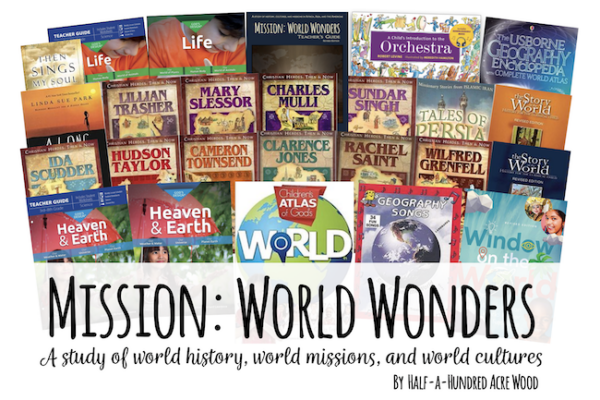
A full year missions-based curriculum with an integrated study of Africa, Asia, South America, and … Learn More about Mission: World Wonders Homeschool Curriculum
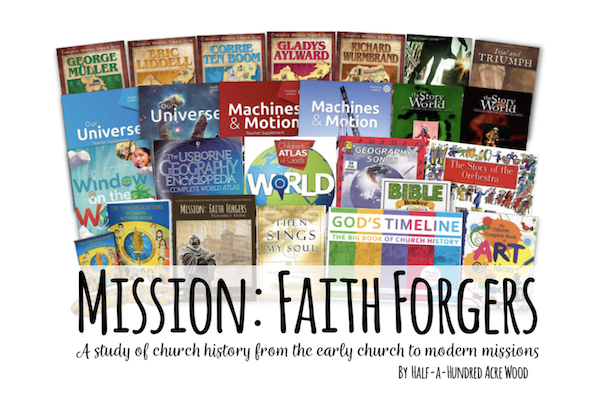
Mission: Faith Forgers Homeschool Curriculum
A full year missions-based curriculum with an integrated study of church history, world history, … Learn More about Mission: Faith Forgers Homeschool Curriculum
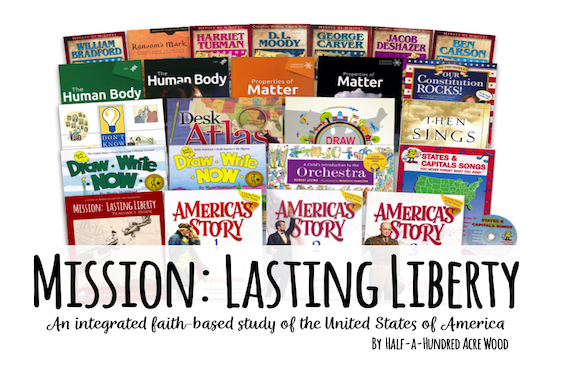
Mission: Lasting Liberty Homeschool Curriculum
Mission Lasting Liberty is a one-year American history curriculum that guides you through a living … Learn More about Mission: Lasting Liberty Homeschool Curriculum
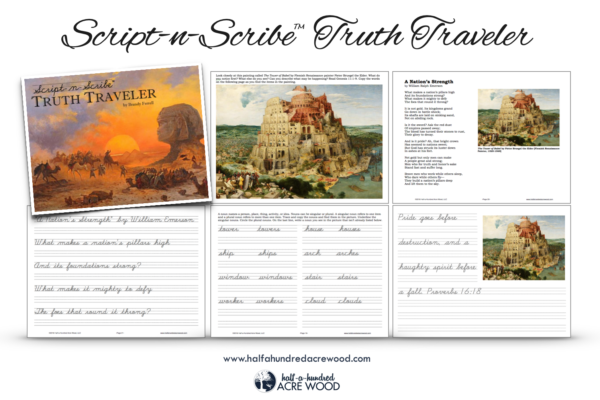
Script-n-Scribe Truth Traveler: Ancient History and World Empires
Our cursive copywork and art study program related to ancient times and world empires. Integrate art … Learn More about Script-n-Scribe Truth Traveler: Ancient History and World Empires
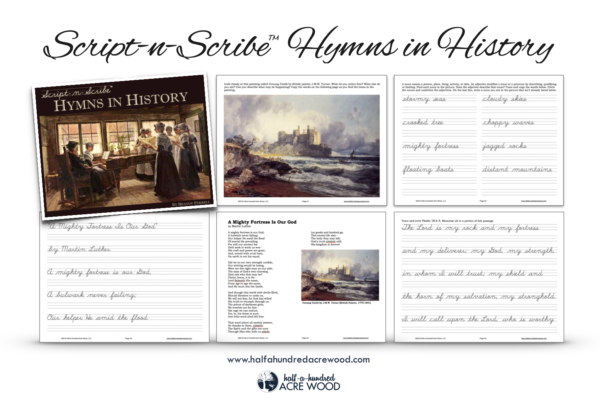
Script-n-Scribe Hymns in History: Middle Ages to Modern Times
Features hymns from the Middle Ages through the early 1900s with historical highlights, related … Learn More about Script-n-Scribe Hymns in History: Middle Ages to Modern Times
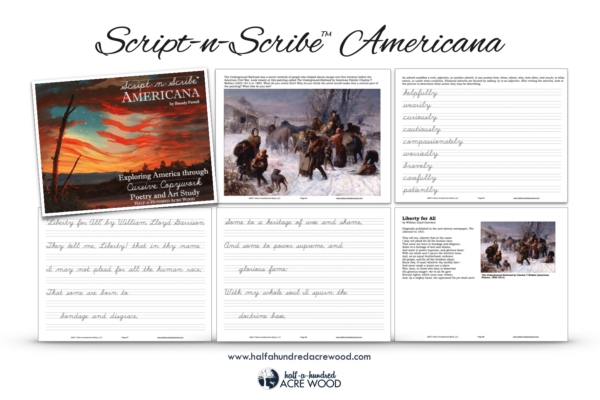
Americana: American Art and Poetry Study through Cursive Copywork
Experience American history through poetry and art study! Our cursive copywork seamlessly and … Learn More about Americana: American Art and Poetry Study through Cursive Copywork
Truth Trek One: High School Lesson Plans
Intimidated by homeschooling high school? You don’t have to be! We've done the planning for you with … Learn More about Truth Trek One: High School Lesson Plans
Truth Trek Two: High School Lesson Plans
This high school-level curriculum provides a full year's lesson plans for eight high school … Learn More about Truth Trek Two: High School Lesson Plans
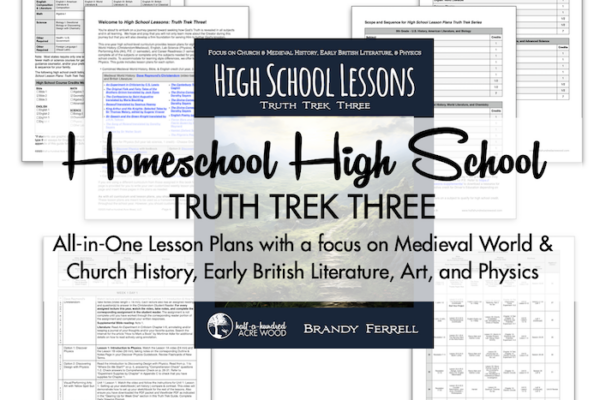
Truth Trek Three: High School Lesson Plans
Parent help. Co-op help. Engagement with family. College prep. A complete, four-year program. … Learn More about Truth Trek Three: High School Lesson Plans
Simplify your schedule
Grow closer to one another through shared reading and discussion using our Christ-centered, missions-focused curriculum, Mission: Great Commission. This series takes families through a study of the entire world over a three-year period and incorporates scripture, geography, art, orchestra, hymn study, and science. Read more about this program.
About us
Perhaps you’re new to homeschooling and feel a little bit lost. Perhaps you’ve been homeschooling … Read more about About Us
Free Resources & Printables
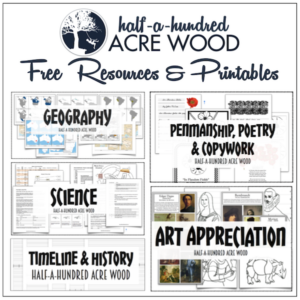
We've created and posted a variety of printables, including nature studies, birthday party ideas, … Read more about Free Resources, Ideas, and Printables
Homeschooling High School
Homeschooling high school. There’s not much that paralyzes a homeschool parent more than figuring … Read more about Homeschooling High School
What Others are Saying
We've been doing Mission: World Wonders this year and the best part of our year has been the missionary stories. I have a 12 year old son and he told me the other night after we listened to Cameron Townsend that before this year he really hadn't seen his need for Jesus. God has used the missionary stories to help my son see how ordinary people trust God. Praise the Lord! ❤❤❤ Keep working for Him, Brandy Ferrell!
Joy
Joyfilled JourneyMission: World Wonders has been an awesome program for my son! We are a year out of the Classical Conversations Challenge program, and I love to be able to get to the things I haven’t had a chance to focus on over the years. Easy to follow, amazing books, and just so much fun! I wish we had this sooner!
Rebecca

We have loved Mission: World Wonders SO MUCH! Reading all the missionary stories and applying them alongside the geography and history studies has been so much fun! Thank you for all your hard work in putting this together for families like us.
Niki
Before stumbling upon Brandy’s Mission: World Wonders curriculum last year, homeschooling with my three children became dull and monotonous. I had a deep longing to bring more gospel-centered truth and LIFE to our day to day. If I wanted to make disciples, I needed inspiration. I could share so much more of what we learned but if you are on the fence of purchasing this curriculum or Mission: Faith Forgers, don’t hesitate. Her plans are laid out very organized and easy to follow. Read more...
Shilo
This is my go to site for CC support. I recently came across the script n scribe cursive coursework and will use it for each of my four children. The copywork is top notch and the book is organized perfectly.
Kendra
homeschool parentOh, how I wish my children had been able to learn from the start with [the Script-n-Scribe Roller Coaster Writer] program. It is so well organized and perfect for all types of learners. And, if you know Brandy and are familiar with her work as a classical homeschooling mother and writer, that work is of the HIGHEST excellence... I can't emphasize enough - everything is BEAUTIFUL and inspiring! Read more...
Mary
Homegrown LeanersWe have been using the Truth Traveler Script and Scribe and have absolutely loved it. We enjoy the beautiful images, poetry, words, and truth added in each of the daily assignments! Thank you for this amazing resource!
Marrissa
Homeschool momLove the cursive work for kids! Everything is laid out nicely, and the parent instructions are very easy to follow.
Christina
homeschool momRegardless of when you choose to introduce cursive, there is a fun, easy, affordable cursive curriculum that can be introduced at any age - even kindergarten! Roller Coaster Writer, created by Brandy Ferrell at www.halfahundredacrewood.com, is a great choice for teaching cursive... it was not very long before [our children] had mastered the entire alphabet and were ready to begin combining letters into words. Read more...
Carrie
Homeschool GiveawaysOur lives are very full right now and I just didn’t know if I could be disciplined enough to do a structured science, music, art and geography curriculum. So I deliberated and put off making a decision until 1 month ago. And then I decided to go for it. And I am so glad I did! The Mission: Faith Forgers curriculum has been so easy to implement without any extra planning or prep for me. We are learning so much about the early church and individuals involved in spreading the gospel, and the best part is that we are learning about and praying for other cultures and countries as a result. Read more...
Ferne
We’ve been loving the Hymns in History! I’ve been memorizing a hymn a month with my 7 and 9 year olds. I especially love the way you’ve tied in artworks from the various time periods!
Emma
- We are wrapping up week 5 of Mission: World Wonders at our home. To say this change of pace and using your meticulously well put together curriculum has been wonderful is such an understatement. I was timid and anxious but excited and hopeful going into this year. It has been so, so helpful to have everything ready to go and laid out clear and simple each week. It is a manageable work load. It doesn't leave me feeling like I'm drowning, or that I'm not doing enough. What I most appreciate probably is how incredibly the pieces connect together. The connections are rich and meaningful and cohesive. I know your work had to be long and painstaking to create these purposeful connections in the curriculum, and it is not lost on me! Just wanted to say a big THANK YOU!
Karissa
Homeschool mom of 6 We love, love, love the services offered at Half-a-Hundred Acre Wood!! Downloads and advice are incredible! So thankful that we don't have to reinvent the wheel along our homeschool journey. Such a blessing!!
Ashley
homeschool mom
Just wanted to send a note that I love the Americana workbook. I ordered it through my charter school. I’m excited to get my 4th grader started on it. She will love it. Great job!
Anna
Homeschool MomGod bless Brandy Ferrell! So grateful for the Half-a-Hundred Acre Wood blog. I've used her ideas for tutoring, teaching at home and even kid birthday parties! I just started using script n scribe, too!
Kimiko
homeschool parentWe have been using Mission: World Wonders this year and it has totally transformed our school day!! We are a CC family and this year we wanted to add a bit more to our educational journey, Mission World Wonders checked every box that I was looking for! The read aloud list is perfect, we have enjoyed reading the missionary biographies. The map work is superb! My little 7 year old can name all the countries of Africa! My 10 year old loves science and wanted to dig deeper, the science projects and lessons have been perfect for us!
Sasha